Monday, 9 August 2021

A Worthy Foe

Work continues on the Dark Souls/Arthurian combat minigame! Today’s notes - enemies.

Before we start… I still haven’t named this thing. Going off the ~lore~ established in the last post, I’m going to to throw some ideas out off the top of my head as I write this and see what sticks uuuuuhhh… Chivalry Is Dead? Too on the nose maybe. Excaliburied. Ha. The Dolorous Stroke, of course, is already taken by Emmy Allen’s wargame for which it is perfect. Could just call it Overkill, but that sounds a bit too Heavy Metal to me. Onslaught? That’s just a word I like, but I don’t think it fits.

I don’t know, still thinking. Answers on a postcard. I’ll keep tagging these as The Green Knight for now, i guess.

Right! Let’s make a foe.

from Dark Cloud, on the Influences list

I think there’s just about enough of the mechanics in place that the easiest way I can think of designing an enemy is to imagine what a finished one will look like. I’m thinking the smallest of statblocks - a card or something, mostly art, with a name and a quotation that they might say before battle. That seems quite Dark Souls.

Then, mechanically, we need to know what they do on their “turn”, every time your dial passes 13, and how the Overkill concept factors into that action. (It might not at all - but so far that’s the only thread of an idea I have so I’m sticking with it.)

Anything else? Some loot you get if you win, their weapon or helmet maybe. Any other additionally info can wait for a more fleshed-out version of the game.

Ok, first step - going back to the ~lore~ and coming up with a character concept that fits! This is going to be a standalone enemy for our playtest battle, so I’d rather not think about castle layouts or anything just yet. This is going to be an open, standalone fight with a clear goal and an Implied world around it, but not much actual detail or complication. Something that gets across the potential of the larger world in one scene.

Here’s what I have right now:

Bridgekeeper Kalidor

“None pass hence that live. Have at thee!”

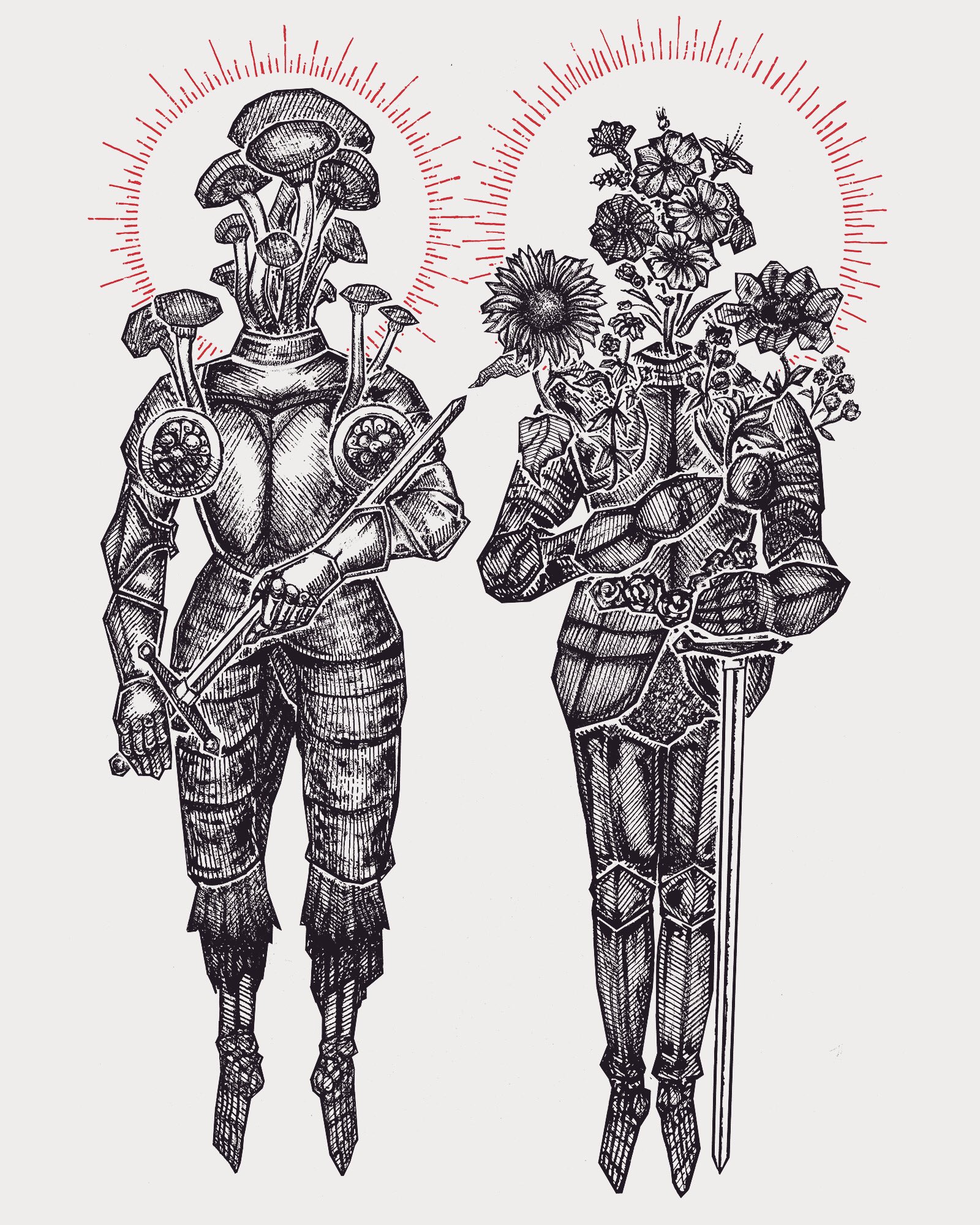
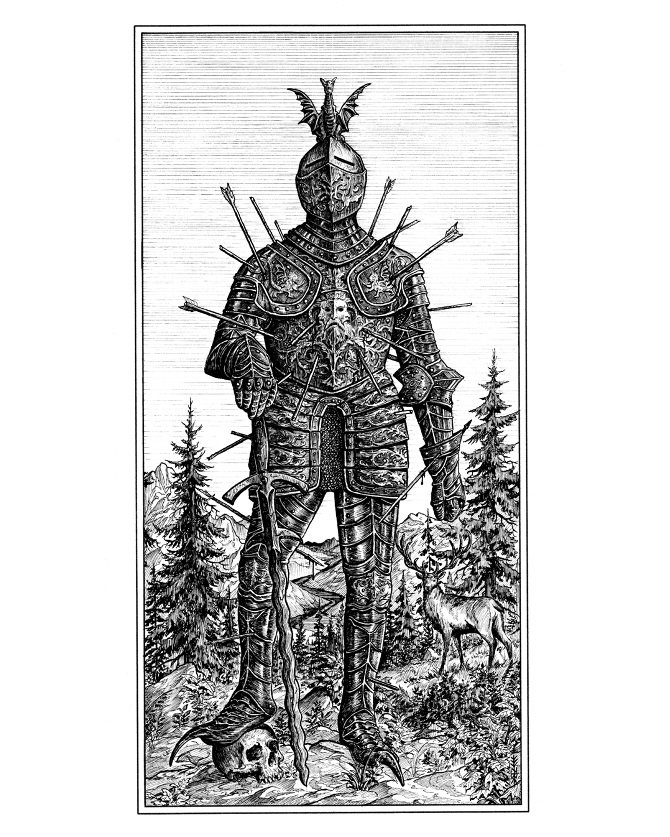
art: relatively normal knight with some plants growing through the armour in places. Male/ambiguous. Sword probably as weapon, emblem on shield of first “boss” Lord? Idk. Maybe his helm is lifted to reveal a skull.

And that’s just about all we need on that front. Normal, kinda boring first enemy - but sometimes you need a bit of boring before shit hits the fan later. Now for the actual work…


This doofus needs to teach the very basics of the game, not in terms of the rules but more what strategies and ways of playing are useful. Which as far as we know are: Calculate your risks, try to pass 13 with a low roll or some kind of defensive effect, overkill is bad.

So he has one big, obvious, slow attack that doesn’t really need any fancy effects. Like a training dummy, kinda. This will also help form something of a base to think of some future enemies from.

Also -what *can’t* we make a feature of this guy? Well as it stands the way to win fights is always the same, rack up hits and then try to finish them off when you think you’ve done enough. This means that we can’t really make fights longer or shorter, or give guys more “health”, without adding complications to the basic mechanics - and complications are not what this fight is about.

So how long will the fight take? Well, 2d6 averages at 7, call it 6 if we’re lucky. Let’s say you get 1 or 2 hits in a turn, maybe 3. That’s somewhere between 3-6 turns of combat before you can even start to reasonably think about risking your turns on the kill shot. Most likely more, and accounting for bad luck I’d say 9 turns is a decent rough estimate for now.

That’s… quite long? Turns should whip by once you know what you’re doing, but this is the first fight and we’re learning. Something to bear in mind, I guess.

Having said all that, if the action options and choices presented by the luck of the dice are engaging enough, this all shouldn’t matter too much or feel like a slog. Actually, it feels about right to me? But that’s all stuff governed by the player’s actions and items, which we haven’t really got to yet.

For now, let’s work out how we can make those 9-ish turns engaging using our enemy.

The “Duel” in question

First question: does he just do the one attack every turn? It won’t feel exactly the same because overkill will factor in there somehow, but over 9 turns that novelty might not sustain if the flavour is really just going to be “swings sword”. So we need some variance in behaviour.

We also need to get across to the player when is roughly the right time to start attempting the kill shot. So, two birds - let’s say that after you’ve dealt 7 hits to Kalidor he changes his action up in some way? This might have the opposite though and make players want to *not* rack up that many hits, since don’t forget this is a solo game and they can see all these rules and variances laid out. In that case, let’s call it 9 hits - plenty of space, and it can be comfortably avoided. If at worst case you’re landing a hit a turn, and still slogging away after 9 turns, it’s time to wrap up.

So what does this guy do when you’ve hit him 9 times? Better work out what he does normally first!

(Ah, the enemy action, the hole in the middle of this doughnut that’s been staring at me for so long now… What to do with you…)

For now, I’m going with Overkill = damage. A few reasons - mainly I did a very rough test and it felt easy to play. And since this is an introductory fight, what better way to get across the concept of overkill than making it literally the only danger you need to focus on? No additional maths or effects yet, just “look at the number”. Sometimes - often, I find - the best mechanic is the one that seems the easiest to wrap your head around. A good mechanic that’s hard to explain isn’t a good mechanic at all.

I know I said just one attack would be boring, and I’ll get to that. But the main thing is OK=dmg is an effective base for other things, bonuses and whatnot. There are all kinds of ways to make it more complex and add extra mechanics onto that base, like the “threshold” thing I mentioned in a previous post.

Speaking of - that idea of 9 hits being a threshold for some kind of change-up? It occurred to me that since 9 is the 3/4 mark on a standard clock, if we were to make this a normal 12-hour clock instead of 13 we could demarcate quadrants as “zones” indicating different behaviours. Four “seasons” with different effects or enemy behaviours as you rack up hits and the token moves around.

Then just make the 2d6 finishing blow a “roll equal or under” rather than just roll under, and we don’t really need that 13. It’ll make turns a little more scary and short, too. A 6 is now exactly half your turn gone, there’s no buffer.

Ok so Overkill is base damage, and different “seasons” can add or change that as the enemy takes more hits. Good enough for now!

So, uh… what’s damage?
sorry

We need to know about player health to know what damage means. I had a pretty simple idea for this during that little scratch play test fight, and it seems to work ok so I’m sticking with it.

The token that now moves around the rondel (better name than dial?) is now another d6. Starting on 6 and ticking down - that’s your health. I like that it represents “you” on the “board”, and it’s a simple way of tracking that eschews note-taking. Most Overkill hits are just 1 or 2 due to a bad or misjudged roll, and a 3 or 4 feels suitably devastating and Dark Souls-y. Nobody would risk more than that anyway, you’d have to deliberately make a bad decision to take any more damage in a single hit. Or, the enemy would need bonuses hehe.

And, there’s still a token on the dial for keeping track of your hits on the foe. Easy to differentiate between the two now that one’s a die.

So - bonuses! To stick with the initial idea of teaching when’s best to deliver the kill shot, I’m deciding that for now our Bridgekeeper deals base damage from 0-8 hits and gets a +1 bonus on 9+. So spring to autumn you’re relatively safe, but winter is coming. That should make it clear how you’re “meant” to approach the puzzle but still give leeway.

The other thing that became clear in my play test is that defensive actions felt a bit bland. I was trialling a “heavy” roll to attack and a “light” to defend (see the first post in this series) as my only two options, and that felt good, but a “failed” defend roll - i.e, one that didn’t push you past 13 and start the next turn - just felt like a fizzle rather than an interesting failure. My idea to fix this, which came from an earlier iteration of the mechanic from way back in my notebook, is that a “failed” defend roll actually reduces the current number of hits on the enemy. So they’re not literal hits, more like your current combat advantage - but basically flinching when you didn’t need to makes you lose a bit of momentum. Even more incentive to take silly risks!

Oh, and as for what defensive actions *do* when they succeed, I’m thinking -1 damage is good enough for this fight. I’m not too keen on all these numbers, but it’s fitting for the type of game this is. I wouldn’t put them in a straight RPG. I’ll need to test this though, it might not feel powerful enough.

(Of course, actions are tied to items, and there may be other shields or items that do other things…)

All in all these changes make the basics of the game feel solid. I feel like you could almost play this fight as-is now, but there are just one or two things I want to iron out first around items and player actions.

Next post I’ll sort that out, and then we’ll have a “tutorial” fight ready to play!

Wednesday, 4 August 2021

Health, Damage and LORE

 … so the UK distributor for The Green Knight has just pulled the film from release. No word on when it’s delayed to, or if it’s coming out here at all. This is of course after it was initially pushed back from May last year…

*sigh*

As I said last week, I was going to use the Green Knight RPG to round out my new combat minigame, but I’ve already decided to save that game until I’ve seen the movie.

Bit distraught tbh. But! Let’s crack on with what we have.

From the RPG box art!

Next piece of the puzzle is how health and damage works here. We can make attacks, the timing system and enemy turns are there, but we don’t yet know what either player or enemy attacks *do*.

Here’s what I’m leaning towards at the moment:

Enemy attacks/player HP: The Overkill idea still seems good to me. I toyed with the notion of OK equaling damage, 3 over “midnight” and you lose 3 “hp” or whatever.

This makes sense in that the more you fuck up the better a hit the enemy can land on you, but it’s a bit bland and 100% of that info is coming from player actions. Which is not necessarily bad, it’s where the system trends in general, but I can see it leaving enemies feeling a bit same-y. What could you do with that number - a base attack bonus stat for enemies, so they all do OK+Stat damage? Fine, but there’s barely any granularity there and now literally all that differentiates baddies is whether they’re a +1, +2, etc. Up to like maybe +5 max before it gets silly. Or, is this “rating” the max damage a baddie can do? As in, no matter how much OK they rack up a “level 1” guy does 1 damage?

Regardless of if I use the OK number straight or not, there clearly needs to be another layer to bad guy attacks. I don’t mind them being defined by their attacks, like the attack is the whole statblock, but that’s even more of a reason for things to be interesting. And variable! They should do different things, maybe at different times or stages of a fight.

Anyway, that’s where that is. Enemy attacks should be cooler and do more, but I don’t know what “more” can look like just yet, other things need to be clearer first.

Player attacks/Enemy HP: current thought: a successful attack deals a Hit. To kill a foe, roll 2d6 under the number of Hits you’ve scored on them.

So like a killing blow. The dolorous stroke that fells the beast! Adds another layer of push-your-luck - do you potentially waste your turn trying to kill an enemy with low hits to save yourself more battle damage? Or do you keep fighting until the kill is a sure thing, all the while getting closer to death yourself? (Again… how that works is as yet ambiguous but bear with me.)

I quite like this so far - but to answer questions about where to go from here we need to know some bigger picture stuff. So it’s time to zoom out a bit.

Micah Ulrich

In my post way back when about the mood board I mentioned how nailing your aesthetic first helps you creatively later. If you have a range of viable options, or just aren’t sure what the next step in your design process is, having a solid idea of what the theoretical final thing looks like, feels like, all that, will really help.

So here, I’m not sure what direction to take health and damage. Should the game feel gritty, on a knife edge? Are these heroic battles, duels, hunts, fights to the death or ritual slaughter? Who is the player character and what kinds of things do they fight  - what should it look like in the mind’s eye when they take or land a hit?

Once we know these things, the right mechanical choice will reveal itself. Is the idea.

So here’s where I’m at with the game’s aesthetic - yes, it’s a “game” now. Might as well be. (And of course this is all subject to change, the point is to have a general idea of where we’re going so as not to wander aimlessly, rather than to set anything in stone this early on.)

Influences: The Green Knight (*sniff*). Other Arthurian legends, leaning towards pre-Christian Celtic and some medieval tales more than later romantic revivals but it’s all fair game. Adjacent Celtic legends, chiefly Welsh/Cornish/Breton. Dark Souls. Bits of Berserk. Dark Cloud and Dragon’s Crown. Nature as inexorable, humanity as bright, callow, feeble and dead. The Otherworld - Annwn, faerie, the liminal. Dingy castles, daring knights. A melancholic contemplation of one’s duty. Lush forests and quiet ruins. Rain.

Basically, the general aesthetic of the non-gonzo fantasy stuff I’ve done here on the Graverobber’s Guide over the years. This is a project I’ve noodled with on an off for a long while without writing about it here, and it’s existed in some form or another since before I started blogging, so this vibe has made itself known in places before, I’m sure. BUTCHERY comes to mind, and a few choice posts.

So does this help us make design decisions?

Hmm, let’s see.

Zé Burnay

Well, I think our player character is a knight, that much is clear. And I reckon these fights are duels, they’ll be fighting other knights - monstrous and inhuman perhaps, but there’s a sad kind of chivalric code behind it all. Twisted ancient kings waiting in their crumbled castles, unable to deny a challenge.

Which leads me to think that you’re a kind of psychopomp? In a Dark Souls-y way, kind of. Maybe you’re Gwyn ap Nudd or the equivalent, on your Wild Hunt, claiming souls for the Otherworld. Wandering the realm of the living, taking out these knights who cling so hard to the old code that they just… don’t seem to die properly. The Empire has fallen, nature has reclaimed the land, and yet these relics persist. And they will answer only to the sword. So, with a kind of quiet dignity, you end their reigns one by one.

(I think “but you’re dead” is a decent enough twist on the basic English fantasy thing? My favourite is still “but you’re a mouse” but Mausritter went and perfected that so here we are)

Or something to that effect. Point is, I’ve figured out the “killing blow” - it’s a ritual to take the soul. Hence why they won’t die otherwise. (And didn’t I say last post that “colossal” rolls will probably end up being spells? It’s almost like I know what I’m doing. Almost.) Tie the spell to a key item like every other action, an amulet or summat. And you can use the 13-hour “clock” to track Hits, since there’ll be no need to go over 13 if you’re rolling 2d6 under em. So a second “hand” token can do that.

Player HP then? I reckon we need to use that dial again. Maybe yet another “hand” can start at 13 and track anti-clockwise as your foe’s spectral blows threaten to rend your tether to this realm before you do the same to them. Maybe if they get you to 0 you get 1 more turn as they prepare *their* killing blow? We’ll see.

(Also - clock it ain’t. We’re pre-clock. I’m thinking “zodiac”, or some wheel representing the seasons or the cycle of life. Like a tapestry. Oooh, on a cloth mat, or a wooden version with little engraved coins, and, custom dice and - wait. What am i saying. Things cost money.)

Enemy attacks are the biggest question. I’m picturing disproportionate FromSoftware knights swinging brutal and ornate weapons… Maybe one or two have a “fire” or “poison” effect but there needs to be a more basic form of differentiation and interest so that these relatively of-a-kind Big Metal Boys feel distinct. Since everything on the player’s side is so item/inventory based, maybe it’s keyed off different armour pieces that offer protections from certain damage “tags”? But then that just makes pre-battle a box-ticking exercise over a choice… It needs to come back to the clock, the timing. (Sorry, not the clock. The… dial? Let’s say dial for now. Shadows on a sundial.)

Hmm. Still needs some thought.

Well, I hope that was a vaguely entertaining ramble in lieu of something actually Green Knight related. I’m enjoying doing all my design thinking on this project in post form like this, so I hope it has some value for those of you reading, too!

Next, enemies I think. Then items, then something we can play.

Friday, 30 July 2021

“Soulsborne” Combat System

 A year of lockdowns have meant fewer games and so less game stuff to post here. Couple that with ~depression~ and a decent amount of Actual Work to keep my gamebrain occupied (currently in progress: Journeylands, various top-secret Mothership things and a real stupid and very fun project with acid lich) and the Guide has kind of stopped being what it once was - a public notebook for me to expunge fun lil game thoughts, just in case they’re useful for anyone else.

This blog was my way into the hobby and while I have a tendency to downplay its importance just like everything else I do, it’s been a valuable constant in my life for several years now. I appreciate all you folks who read regularly, anyone who stops by on occasion, and especially folks who’ve had fun playing games with some of the things I’ve posted here.

I guess my point is I’ve been feeling appreciative of this place lately and wanted to shake off the cobwebs a bit!

So here’s a thing I’ve been playing with for a while now.


It’s been a rough concept for a while, first put into action in Jack Rabbit Jam: Battle Roulette, my overambitious attempt at a KS project for my board game project Paradice Arcade. So yeah, nobody saw it lol

I’m using versions in DEADLINE and Journeylands, but those are more meta-structural things, basic trackers that don’t really get into the various permutations of what the mechanic can do.

It started as a combat system and I think that’s where it shines! Or as both in conjunction.

(I made it clear these were just notes, right? A work in progress kind of thing? Ok good)

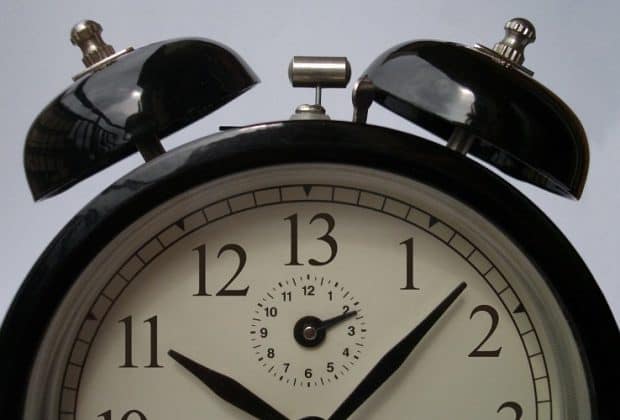
Ok, so. Imagine if you will a clock with 13 hours. Place a token on 13. Each time you roll to resolve a combat action, move the token round clockwise equal to the result of the roll. When you hit or pass 13, the enemy takes their turn. Repeat until victory or death.

That’s the basic gist - again, if you’ve read DEADLINE you already know as much. But I’ve been extrapolating this thing in all kinds of different ways, and that’s where the fun is for me.

So I guess let’s talk through the implications of this thing and how it can be turned into a “soulsborne” type combat minigame.

(“Soulsborne” video games involve tense combats where every movement is sluggish and deliberate. You have to learn to feel the weight of your various action options, read an opponent’s moves and try to time your attacks, counters, dodges, item uses etc. See this previous post on Monster Hunter.)


Before we begin, assumptions: This is a combat minigame, so using it means combat should be fun and at least somewhat viable in your game. So, not applicable to the kinds of adventure games I often make. Although the adventure game format surrounding this offers tactical infinity, things within combat will be a little more boardgamey and strict. Fighting becomes its own thing with its own rules rather than just another outcome to standard play - think games like 5th Edition with their “roll for initiative” demarcation of play states.

(Also, I don’t have a name for this yet? “Clocks” already mean a thing so I don’t want to call it something confusing. Maybe I just need to build a whole game and name that instead.)

Ok so first implication - rolling low is good. Moving the token 1 or 2 spaces leaves more space ahead of you on the track for more actions this turn.

I’m using 2d6 because this was a Paradice Arcade game first. All those games use 2d6 and a coin or 2 as tokens.

As it stands, there are a few types of roll which correspond to different actions (all names placeholders):

“Heavy” rolls: 2d6, take the higher. Big, slow and deliberate moves like swinging your bastard sword or loading your longbow and taking aim. Avg 5-6, so that’s likely half your turn gone.

“Light” rolls: 2d6 take the lower. Quick, light and simple actions. Releasing that arrow, a swift parry perhaps. Avg 1-2, barely make a dent in your turn most of the time.

- “Colossal” rolls (idk I literally came up with that name right now): 2d6. Huge, slow things that will almost certainly eat up most or all of your turn. Probably spells.

- just Rolls: 1d6. For miscellaneous or random actions. Using “an item”.

No maths or modifiers, natch. Though I’m not necessarily opposed to the odd +1.

So a turn might look like… notch an arrow (heavy roll, +5 on the clock), fire (light roll, +1=6), knock a second (heavy roll, +4), chicken out and don’t fire in case you pass 13 so dodge or something (quick roll, +3).

Every action will be tied into an item in the inventory (see? It’s practically a board game!). So your boots have an action to dodge, the “arrow” action is knock and aim, etc etc etc. And each demands a certain roll. You’d probably have a L and R hand, and only be able to use actions if the items were in hand, with another action to rummage through your inventory - quivers would make reaching for arrows a free action… You get where I’m going here. Boardgames.

So this is all bringing us to implication 2 -

Striking 13

(This is not the term for it, it’s already a term in GRAVEROBBERS for the blackjack mechanic. Damn, I kinda wish GRAVEROBBERS wasn’t a light adventure system so that I could wedge this thing in there, the whole clock/13 thing fits the vibe and numerology far too well. Maybe this’ll end up as a hack pamphlet for that system some day.)

Anyway. When you hit 13 on the money, you’re lucky - your turn just ends. Pontoon, blackjack, vingt-et-un. But if you pass over 13? That’s bad!

Firstly, whatever action you were taking that made you roll and pass 13 doesn’t happen. You’ve been interrupted by your opponent. Some special actions might change things - if you pass 13 with a “shield” or “dodge” action then it doesn’t get interrupted and instead blocks some enemy actions, perhaps.

Second, you’re now eating into your free space for next turn. If you roll way over and end up on 5, that means that once the opponent’s action resolves you’re starting on 5, not 13. So you only have half the space to advance before they go again.

(Hopefully the “timing” element is starting to become clearer at this point! And why I’ve dubbed it a soulsborne type system. You’ll be picking your actions and pushing your luck, doing things like deciding to do a quick dodge as your turn ends to limit how far over 13 you go. Or risking it all on a big roll, missing and leaving yourself vulnerable.)

Third, Overkill. That’s what I’m calling it for now anyway. And to explain that…

Monsters

I’ve lost nearly all patience for statblocks. A number or two in a MoSh module is about as much as my poor heart can take these days. I’d rather resolve enemies through basics of the system like saves and checks, and general play.

With that in mind, opponents in this system will still need something because everything’s so… boardgames. We’re getting fuzzy here because this is the freshest ink on the wip, but the general idea is that the number you end up on if you pass 13 allows badder enemy actions. That’s called the Overkill. Oh shit I passed 13 and landed on 2, that’s 2 overkill.

So a dragon might always attack on its turn, but on a 3+ Overkill it does fire breath. Or something.

This also means that this system is fairly viable for solo play. ALl my examples here have been about 1 character anyway, and it fits the soulsborne vibe. But I don’t think it’d be difficult to do a party-based fight here. Maybe everyone gets a “hand” on the “clock”, and all your Overkill adds together.

Is all that good? I don’t know.

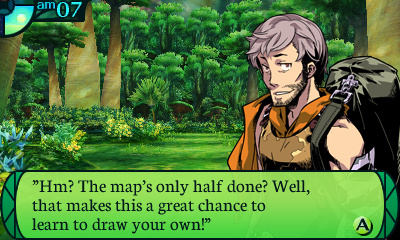
Oh, the only other idea to mention is using another “hand” on the clock as an encounter roll, a bit like the Etrian Odyssey inspired indicator here.

Yet to Come

Where this leaves us is with questions about health and damage in this thing, and… I don’t have that sorted out yet. I’d like to bring everything back to the clock - maybe another hand tracks the flow of battle? I don’t want to use classic HP here, mainly because I just kinda decided not to but also I’d like something more dramatic and less gamey. I love HP as a mechanic but I don’t know that it fits here.

Well, I’m writing about all this because hopefully I’ll get to playtest it properly soon! Maybe?

the new A24 movie The Green Knight is finally coming out here next week, I’ve been hyped for this thing for literal years and have pretty much already decided I like it based on the first trailer. And Dev Patel.

Anyway I got the promotional RPG that A24 made back when the film was supposed to come out way back when. It’s in a green box made to look like the old D&D red box, and it’s an actual game with its own mechanics and ideas. Gonna go see the film with some peeps and then come home and play the game over a stein of mead or whatever the fuck

… And I think this “soulsborne” mechanic would fit really nicely as a “duel” mechanic in that game. Frequent Guide readers know my penchant for twisted fairytale pastoral stuff - mix that with the Arthurian legend stuff and some other old Celtic stories, some added Dark Souls vibes and I can totally see this mechanic sliding in nicely.

Dappled light over ruined stone in a forest clearing, facing down against what was once an ancient king and is now a terrible and melancholy beast, nothing but your sword and wits in hand… yeah.

Maybe the fusion will work - there’s no HP/damage in the Green Knight RPG, just an Honour/Dishonour sliding scale, maybe that’s the answer to the damage question. Maybe it’ll be a mess! I don’t know!

Anyway, it’s fun to make up dumb game things and play them with your friends. Being a Professional RPG Person is great and all, but at the end of the day this is a hobby, and there’s only one reason we should all be here - games with mates. Or solo. Playing, is the point.

Here’s to more silly entries in the Graverobber’s Guide, and more playtime to come.

Wednesday, 14 July 2021

Random Encounter Mechanics

 We all love random encounters (if you don’t, start here). But is the classic random encounter table still the best way to generate them?

Probably yes. But that won’t stop me from stealing some ideas from video games.

Random encounters are typically seen as a bit of an annoyance, or even an anachronism, in classic dungeon crawlers and JRPGs, interrupting players with a sudden combat screen. Contrary to the tried and true methods of tabletop though, there have been all kinds of advancements and new takes on how to deliver these encounters.

Let’s look at three games with their own takes and try and adapt those ideas for ttrpgs!

Pokemon

*deedleedleedleedleedleedleedleedl*

The most obvious way that Pokemon made its otherwise fairly typical JRPG encounters more forgiving on its younger target audience way by clearly delineating encounter zones. In the tall grass? Random encounters maybe! Not in the tall grass? No random encounters ever! And then proper wilderness places like caves and the open ocean have encounters everywhere.

Seems like a basic idea but it hasn’t been copied often. Not only does this mesh perfectly with the series’ themes of nature and urbanisation, but it allows for fun level design and leads to more engaging traversal in the overworld.

You can see that one path is overgrown and one is paved - it’s like a dungeon corridor, one fork emitting cold wind and one an eerie warmth. And there are still challenges on urbanised routes, just a different kind. Every new route is full of little decisions.

A couple of other things make the Pokemon approach come together. Firstly, the battle/capture system that is the games’ premise means you want encounters, at least some of the time. Even if you’d rather not fight right now, there’s always the curiosity of finding new monsters.

Also, you can negate encounters entirely with special Repel items. They don’t work if the enemy is way stronger than you, but you can go through most routes with a spritz or two of repel and just… not have to worry about the whole thing. The trade off is money, as these items are consumable and must be replenished.

How to implement?

- be clear to your players where and when they might have a random encounter (this is basic communication stuff really)

- make encounters appealing from the outside (everyone has treasure in this world? You can “catch” monsters in some way and add them to your squad?) Keep these rules consistent across all encounters.

- Offer an out. Some magic item that repels monsters in exchange for… money? A quest? HP/your soul…?

Etrian Odyssey

Pretty much the closest thing to an old-school computer dungeon crawler still out there, but not without its updates! Etrian Odyssey has a little indicator in the HUD that changes colour as you traverse its megadungeons. Green: you’re fine. Yellow: hmm. Red: encounter soon! (This has appeared in other games, like Legend of Dragoon).

You’ll never have a random encounter unless the indicator is red. It’s not just a simple clock ticking down though, the encounters are still a surprise each time - you can’t count steps until the next one.

Etrian Odyssey mixes this up by having its big boss monsters, FOEs, never appear in random encounters, instead being represented in the overworld.

Lots of JRPGs have gone the way of overworld encounters as a development of random battles, but FOEs are a mini game unto themselves - way too strong to fight when you first meet a new type, you instead have to study their movements across the map (the map you draw!) and avoid them outright.

And if that’s not OSR…

How to implement?

- Use an indicator system. Eg: Every dungeon turn, roll 1d6, keep all previous rolls in a line. As soon as any of them show doubles, have an encounter and reset the line afterwards.

- Differentiate your big, bad monsters. Remove them from the encounter table and represent them through environmental clues, omens… Talk up different ways to avoid them or at least track their whereabouts/ know when you’re in their lair. One big, unique beast that affects everything around it.

FANTASIAN

This one launched on Apple Arcade this year so you’d be forgiven if you haven’t played it. It uses a great new idea to govern its encounters - the Dimengeon is an in-universe device that warps them into a prison dimension for you to fight later. You only have to fight them when the Dimengeon is full, but you have to fight them all at once!

This not only lets you explore the game’s beautiful diorama overworlds without constant interruption, but also functions like Etrian Odyssey’s indicator by acting like a countdown to the big fight.

It also leverages the game’s battle system, which involves aiming attacks across a 2d plane - with more enemies, you can line them up like bowling pins and take out more with each attack. There are also power ups in the Dimengeon to help you out, but you have to hit them with those attacks to get em. Very fun.

How to implement?

- Something appropriate for your game’s world. I’d do like a lantern that can store ghosts, but risks unleashing them all at once if it breaks. It’s Ghostbusters. Maybe a push-your-luck, blackjack type system: draw a card each time you suck up a ghost, if you bust then all your ghosties break free. (If this one sounds like your jam, you’ll love my game GRAVEROBBERS btw, free download here.)


All of these methods involve making the structure behind your encounters more readable to your players and easier to deal and interact with! Encounters aren’t just punishment to throw at player characters, or distinct pockets of gameplay. They can be incorporated into your world and system on another level.

Wednesday, 7 July 2021

GRAVEROBBERS Bare Bones 1.0

 The Bare Bones of GRAVEROBBERS are now available!

Download them here for free.

This 1.0 release marks the first “finished” version of the game. Rules have been tweaked and finalised, structured with usable guidelines and laid out as a pamphlet for easy use on screens or printed out.

(Yes, I know I said 0.4 was next. I got carried away.)

Patch notes:

- we’re live! 1.0 means that while there may well be updates and adjustments still to come, we are no longer in alpha. GRAVEROBBERS has graduated from a 2-page word document to a… slightly nicer looking 2-page word document.

- ease of use and clarity updates! 3-column pamphlet format. Everything has been reworded for reference and simplicity. Extraneous details are omitted, while new edge case rules and notes should help everything flow better. Each rule is still a modular, removable whole, though! Oh, and there’s a character sheet now, finally

- rules tweaks! Inventory/encumbrance rules now standard (though still modular), along with a more defined currency system that ties into the Black Market phase (was Day Phase). The White Eye (was Eye) has been altered - no more certain doom, just a very precarious possible death spiral. Yay!

- item changes kind of ties into everything else but items now have suggested Black Market prices. Some other minor changes (did you know that victorian policemen’s truncheons were marked with their seal an id number, literally it was their badge, you can’t make this shit up, acab and so forth)

- other things i probably forgot!


If you’d like to see more of GRAVEROBBERS, and not just “when i get round to it”, you can support the project through the PWYW feature on gumroad or by purchasing my other game stuff.

Thanks for your support over the years. Next up - starter adventure!


Monday, 14 June 2021

GRAVEROBBERS: Items

Now that almost all that’s left on our character sheet is the various terrible fates that may end our graverobbing career, what other options are still open to us?

Items!

An adventure game staple for good reason. Who doesn’t love a good creative use of a flaming torch and 10 ft of hempen rope. Ball bearings! Glue! This is the good stuff.

In the 0.4 update  to GRAVEROBBERS (link goes here once it’s live…) I’m adding an optional rule (all rules are optional, being in trouble is a fake idea) for an inventory system, which is a revised version of the Encumbrance system I came up with here.

The aim is to really focus in on those items. You’ll care more about them when you have to pick and choose! Players are much more likely to be aware of what they do and don’t have, and therefore actually use those things, when they’re having to make tough inventory management decisions. Of course, these can become boring very quickly - which is why I’ve tried to keep things super simple and slot-based. Hopefully it makes a useful addition.

Having so little by way of mechanics to begin with, that new inventory really does draw focus on the character sheet. It’s making me think about how I might further develop this item economy and really build it in as part of the overall structure.

F’rinstance, all(ish) starting items in the Bare Bones will now come with a suggested black market price, doing the duty of an equipment list from classic games. Of course I am wary of putting a currency system into anything, but this is a game about wealth and money and power anyway

So here’s me thinking about just how central this item/inventory system can get. It’s already a suggestion, but could the Day Phase card draws be explicitly just about getting items? Make it the Black Market Phase (as opposed to… the Red Moon Phase for heists? Idk), every purchase is a draw, that’s what draws are for now? Much more gamey than the current “resolution mechanic”-esque card draw, but that’s not necessarily a bad thing.

(I’ve been very impressed recently looking into Ava Islam’s game Errant, which has a lot of lovely gamey and procedural rules like these that don’t feel as obtrusive as a freewheeling jazz boy like myself might imagine? That’s the key word, I think “procedures” rather than mechanics or rules. Anyway, here’s Chris “Bastionland” MacDowall looking through Errant, definitely worth a watch-along.)

Then again, a phase that’s just “item shop” seems too limiting given the scope of actions available in a freeform game, even if there’s going to be an emphasis on items. Which, again, got me thinking (what doesn’t, folks, am i right, folks,) of the other things on a character sheet.

Here in GRAVEROBBERS land, aside from Odds and Inventory we’ve got your Crime, clothing and of course player notes - setting details, info gleaned through adventure.

And what are these if not… items?

In other games you might have more on your sheet - languages, spells (the closest GRAVEROBBERS comes to either is the Third Eye). These little tidbits - “I can speak Goblin”, “I know the King’s middle name”, “I can make fire with my fingers” - they’re items, just like “I have rope”, “I have a torch”. They’re little, fictional truths  that you can whip out and use creatively. Same thing.

This contrasts with the other bit of the sheet. Unlike what we might typically call “mechanics” - stats, Odds, AC - they’re opportunities as opposed to restraints. Well… they’re restrained (you have a rope, it says “rope”, you don’t have a snake, it doesn’t say “snake”), but they’re not things that are happening to you in the same way as big nasty RULES, they’re chances to make things happen.

So if your card draw is “just” about getting items, but “items” are everything on your sheet that’s not a RULE - trinkets, contacts, information - then…? Yes this is functionally back where we started, but there’s something to this framing, I think. If we can make it more explicit, more procedural - 

- but here I am, talking about potential future updates when the new update isn’t even out yet. Stay tuned!

Monday, 7 June 2021

GRAVEROBBERS: Odds

 In the upcoming 0.4 update to the Bare Bones of GRAVEROBBERS (I’ll edit this when it’s out!) the system is getting its biggest mechanical change in a while, so I thought I’d go over some of the reasoning there rather than just sticking something in the patch notes. This is inside baseball, nerdy design talk, but hopefully it’s of use to someone!

(Ok so i say mechanical update but it’s really a semantic one, none of the numbers are changing - but then again in a medium made of words, semantics are mechanics, so…)

Up until now the Odds were a PC’s “stats”: Finesse, Fortitude, Violence and Will. After the update these will be reworked into Death, Detection, Detriment and Despair.

as I said the dice/numbers side functions the same way as before, roll for values in character generation, roll xd6 in relevant situations, success means you’re safe and loss means you lose 1 Luck (“HP”). It’s not a resolution mechanic because you don’t “fail” the attempted fictional action (although that’s a valid interpretation) but it brings you closer to the failstate. I went over the rationale and the behaviours it encourages here, some details have changed since then but I think that’s a good explanation.

I’ve already explained the rolls in GRAVEROBBERS as being “more like Saves than Checks”, and this new version makes that more explicit. Characters no longer have things they’re good at! you don’t get to be strong or quick. You get your Odds of Death, in black and white. Good luck.

It’s been said many times that combat is a fail state in adventure/OSR games, or that the answer is not on your character sheet, or that a combat roll or skill check is a last resort rather than a button to press or a key for one of the game’s various locks. It’s my hope with this design choice to “enforce” that somewhat, put it in writing. Imagine OD&D with only Wands, Petrification, Death etc. “Oh are these the cool things you can do?” “No those are all the things that can kill you”. You don’t want to roll!

That’s not all that’s left on the character sheet of course, you still have your items and your notes, character details, in-universe stuff - the things that adventure gamers want to use to overcome obstacles, so why not make that our only option?

GRAVEROBBERS is a harsh, scary (in a fun way!) game, let’s make the character sheet harsh and scary. Of course on the flip side, having the odds written out means there’s always a chance! It’s not all doom and gloom, you know you have these safety nets. Just maybe don’t rely on them too much.

Anyway hopefully some of that makes sense and my intent is clear! Let’s go over the four new Odds - why these, what’s the deal, etc

Death. This is basically the exact same as Save vs Death/Poison in OD&D. The function of a death save has been well established, I’m not exactly doing anything new here! Also on a purely aesthetic level it’s wonderful to have Odds of Death: X written out on your sheet, perfect tone setter

Detection. It’s a stealth game after all! The old rolls triggered on a “caught or hurt”, so here’s the “caught”. I like things this way round more I think! Feels like the logic flows a bit better. And between this and the card system for the House I’ve managed to completely abstract/mechanise the stealth aspects - the idea is that this will have the same function as HP, attack rolls, AC et al have on fighting: Too much fictional positioning in one little moment? tough decision that isn’t as fun if we get to make it ourselves? let’s play a minigame instead. Hide and seek has enough “I saw you!” “No you didn’t” without being played by made up characters in a fictional world! This should take all that out of the players’ hands in a way I hope folks find freeing. You really don’t need to RP or even account for guards and stuff at all, what with the card system automating it all - but I’ll probably talk about that more in future

Detriment. yes I could have just called it Damage but style is substance! This replaces the traditional use of an HP system by accounting for/abstracting all non-lethal damage. So that’s falls and bumps and bruises, but also combat - this is the new Violence roll. Violence already felt nicely bitey and dangerous, now you don’t even get to sound cool, you just roll for “do i get hurt”. Whether you’re attacking or being attacked, as before! All combat is just a Save vs Pain. Can I ward players away from using violence any further?! (maybe, we’ll see lol)

Despair. This replaces Will, but since the saves now trigger based on their individual namesakes rather than a universal “caught or hurt”, this one can show up any time PCs dare countenance the setting’s horrors! Fans of Call of Cthulhu and Mothership will recognise this as a Fear or Sanity save, kind of. Also a nice stand in for save vs Magic. I like that there’s now this explicit supernatural pillar to the game.

In fact, as four pillars of play, the Four Things That Might End You, I think overall we’re getting across the message of GRAVEROBBERS pretty nicely! I like to believe someone unfamiliar with the game can see these four things and get a decent idea of what perils, and what sort of game, to expect right off the bat. Also as touched on above these are the four things that the Dealer and other players won’t have to worry about “running”, decisions they won’t be able to - or have to - make themselves.

You will face the terrible risk of Death, Detection, Detriment and Despair, graverobbers, whether you wish to or not… what will you do?