Tuesday, 4 July 2023

It Came From The Blogosphere… Again!

 Ok don’t get too used to these. But since the second I posted my last roundup of fun blog stuff I’d been reading, I’ve been finding more and more.

Rey and Grey are in the process of getting BREAK!! made, and Rey did a kind of retrospective video on the game’s long development process here. (Speaking of YouTube, I mentioned the Bastionland broadcast in the last blogosphere post, and then in Chris’s very next video he gave the Graverobber’s Guide a shoutout! Which was nice. So if you’re here from there, hi.)

Here’s To Distant Lands talking about Zelda-style NPCs. TOTK has some really top notch NPC writing, and this post seems like a great way to capture some of that energy - with actual, practical tables and stuff.

Bait’s Terrifying Cuisine is getting a fancy new reprint! Here’s creator Giuliano Roverato talking about how it was made. One of the great adventures, imo.

You know I like words, right? Here’s 100 good words from Throne of Salt.

The Alexandrian categorises dungeons by size. What I really like here is the bit about expedition-style play.

Benign Brown Beast has a system for tracking movement through space, and the example catacomb dungeon makes it even more my jam tbh

The Dododecahedron talks about toolbox design. A nice summary of the kind of gameplay I enjoy too!

Someone on Reddit of all places made an rpg using only 3 (or fewer) letter words. May be fun, can you try it?

Skerples works on their new setting by going over some original, obscure Arthurian texts. Very cool

Nate Treme’s budget banh mi recipe 


And that’s it for this time around!

I may be posting a bit less frequently - WEAPONS TEST 023 is due to come out this month, and Twitter dying slowly means that I’m seeing less cool stuff (also less of all the other stuff, which is a plus).

I also got some pretty dire financial news unfortunately, as my income for this month has disappeared overnight. So we’ll have to see how sustainable blogging and game stuff is going forward.

If anyone is in need of any system/adventure writing, or editing/proofreading services, I’d appreciate the work - email me at graverobbersguide(at)gmail(dot)com. You can also buy my stuff here.

Hopefully I’ll be back on my feet and posting here again soon :)

Tuesday, 27 June 2023

Combo Encounters


I’m a big proponent of rolling twice on an encounter table and combining the results. 1d6 goblins plus a wandering knight becomes stumbling across a knight fending off goblins mid-battle, or a lost knight who has convinced the gobbos she is their god and keeps giving you “play along” looks, or whatever.

However! I’m also a big proponent of not making extra work at the table. Work isn’t bad, and games probably aren’t games if there isn’t at least a *little* work somewhere, but at the end of the day we’re here to play. And making stuff up on the spot is work, even if it can be fun, and gets in the way of play.

So instead of getting the GM to come up with what these combos mean at the table, how about writing your encounter tables as a list of combos in the first place? This has the added benefit of starting a lot of your writing for you - coming up with 3 encounters, then combining them in every possible way (1+1, 1+2, 1+3, 2+2, 2+3 and 3+3) basically doubles your initial ideas. You can also show some of the location’s faction interactions of ecology in a more direct and useful way.

This example table is loosely based on the first “stratum” of the megadungeon in Etrian Odyssey V (which I recently dredged up my old 3DS to play again once I saw how much they’re charging for the new Switch remasters). That game has some fun inter-monster interactions in encounters, but with our medium we can of course go further!

1. Acorn-men + Acorn-men. These cheeky little bastards are born when wildfire spirits settle in hollow nuts and fruit pits. Love making noise and mischief. Water douses their spark. When multiple groups gather, they have loud and raucous parties that can start forest fires if left unchecked.

2. Acorn-men + Wild hog. Hogs love eating fallen nuts from the forest floor, and do not seem to care if the nuts come alive and protest. Consuming the wildfire spirits within gives them temporary flame breath.

3. Acorn-men + Flinging vine. The long, green tendrils that hang from boughs here are in fact not vines but a type of parasite. They are blind but react to touch, coiling their sticky bodies around their victims and bashing them against tree trunks or throwing them as far as they can. This causes the acorn-men to explode.

4. Wild hog + Wild hog. A breeding pair, the larger stronger female holding back unless threatened, the smaller, aggressive male picking fights with anything that enters their territory. As they need to bulk up to feed and defend the coming offspring, they are easily distracted by food and will go for the simplest target.

5. Wild hog + flinging vine. Smaller hogs are easily flung aside and know to stay away. The largest seem to enjoy the tug of war and sometimes even pull the parasites down from their perches. The disconnected vine then flails wildly like a whip, sticking fast to the hog until it dies.

6. Flinging vine + Flinging vine. When two or more vines get tangled, they unintentionally create a deadly trap. Touching the knotted vines causes them all to pull and attempt flinging at once, which can bring down the trees they are attached to and crush their would-be prey.

Friday, 16 June 2023

1d6 Fun Crimes

 I love character creation in Graverobbers. It can take less than a minute, it’s thematically relevant and you can die. That being said what’s out right now is still the Bare Bones, and I’ve had all sorts of ideas rattling around for how to flesh them out, add more (optional) steps to chargen.

The issue is the same one that always occurs when adding rules, especially to minimalist stuff, which is whether the added steps of mechanical complexity justify their effects. I’m a harsh judge of this stuff, and none of my previous concepts panned out. I wanted something like MoSh’s d100 patches or trinkets, elegant and dense with flavour, but more specific. Also something tuned as much towards straight up gameability as character - like Bastionland’s failed careers (check last post for a great video on these)

Anyway, long story long, this week I cracked it. The way the Pocket Guide is shaping up so far there’ll be a little space, so right now the plan is to fill it with d66 Minor Offences. These are extra crimes to accuse your characters of during creation. Nothing as involved or career-criminal as the main Crimes, but still actual things from London’s irl history.

They’re mainly about selling, stealing, swindling or causing some kind of public nuisance. Each comes with one item, and I’m already having way too much fun rolling up little weirdos and seeing how these juxtapose with the other facets on the sheet. And just seeing them all in a list gives me the clearest image I’ve had of this city of criminals. Can’t wait to share.

While I tinker with these and get them to play testing, there are exactly 6 in the list that my word processor is putting that squiggly red line underneath that says they’re not real words. They are, just obsolete - so I thought I’d do a little dive on each one and its real history!


Cogger. Just an old word for a dice cheat, cog meaning “trick” but generally around games of dice. Nothing that fun around this one but it’s a nice word, and the item you get with it (pair of dice, 4d) makes it self-explanatory. As I’ve said before, any time i use a weird old word or esoteric reference it should be clear from context or eminently googleable

Maltooler. So as it turns out Victorian London had a lot of specific words for pickpockets and petty thieves, dependent on what one was stealing and how. An old version of this list had more of them but I whittled it down to the best ones. A Maltooler used specialist tools to pickpocket as opposed to doing it by hand, things like little knives to cut purses or even tiny mechanical grabber claws. my version starts with a magnet which is fun

Overmourner. The only one that’s not a word - overmourn is, and means what you think. But did you know it’s illegal in England to linger at a grave after a funeral? I could find records from as recently as 2015 of someone getting the rozzers called on them and incurring a fine for lingering too long at a loved one’s graveside. This fucking country man

Pudding-snammer. One of the highly specific thief terms. These were people who grabbed stuff off you as you were exiting, say, a bakery. I enjoy that these say as much or as little as you want about a character - remembering that these are alleged crimes. Maybe you bought that apple turnover fair and square, who’s to say.

Tregetour. Someone who does tricks and magic, often a juggler which is the usage I’m going for here. A lot of these petty crimes are victimless, just people going about their day or trying to earn a living, but the idea is that players get more of an insight into the anti-canon and what exactly the House considers worthy of legal retribution.

Whipjack. And finally… a couple on the list are terms for specific varieties of scam artist. A whipjack is someone who pretended to be a sailor, out of luck and stranded due to a shipwreck or some such. Like this one guy who for years used to push his motorbike up and down a street near me, stop cars and ask for petrol money. Wonder where he is now. Probably not far, he’s got no petrol.


The final list will have 30 more of these, and you’ll find it in the Pocket Guide to Smocklehythe or some supplementary material thereof. Get it now while it’s cheap!

Tuesday, 13 June 2023

It Came From The Blogosphere: The Return

 I used to do this more often, sorry! Blog posts I’ve read recently that I liked. Just so happens that a bunch of really good ones have come along in relatively short succession, hence:

Zedeck just posted about how Tone Is Bullshit and I concur! I’ve had questions of tone rattling around in my head lately as I create more Graverobbers stuff, but those always go out the window when it comes to actually writing or playing. Of course art can be funny and scary and sad. That’s life!

(“But you write for a horror rpg” yes and there is always a cat on the spaceship or an NPC called Kevin Tremendous. Also MoSh doesn’t attempt to scare its players, just their characters, but that’s a discussion for another time sooooooo)

I always enjoy Marcia’s very thorough yet accessible looks at old D&D from a modern context, and this overview of Collapsed Tiers of Play is no different! It’s neat to see how old assumptions in the rules have turned into something more… approachable? through play over time. And I love the whole dungeon/town loop, so good food for thought in this one.

I bounce off “proper, academic” texts like criminal charges off a cop, so it’s a testament to Enziramire’s writing that I was so engrossed by An Empty Africa, a look into Pathfinder’s attempt to do an African fantasy setting. Well argued and researched, and while it’s not something I can speak to directly it helps me think about how I use “real places” when designing game worlds.

Speaking of - one last blog, non-gaming this time! The London Dead is, if you’ve read any of my Graverobbers stuff, clearly going to be a perfect source of inspiration from the name alone. I appreciate David’s insights and stories into how we treat our dead and death in general. (I’m glad the first I learned of the Hardy Tree’s falling was in the recent post about it’s possible regrowth!)

Side note - Chris “Bastionland” McDowall does great live streams over on his YouTube channel, reading through and playing games, giving thoughts and insight. Check out his recent flip-through of BREAK!!, and tune in tonight where he’ll be going through Electric Bastionland’s failed careers - definitely worth a watch!

That’s it for now! Happy reading x

Thursday, 8 June 2023

Building Smocklehythe - Slang & Sundries

The thievery was boasted about and romanticized until it seemed a kind of heroism. It did not have any taint of criminality and the whole of the south coast had pockets vying with one another over whose smugglers were the darkest or most daring.” - Paul Theroux

Work continues apace on A Pocket Guide to Smocklehythe, the upcoming starter set for GRAVEROBBERS, my ttrpg system for adventure games of stealth & sedition. A reminder that you can buy in now and get the Bare Bones, then get all the rest of it for free when it’s finished and goes up to full price. Click here!

The final version changes shape as it grows. What was going to be two adventure sites is now one, the Smocklehythe Sewers: a fun little dungeon of foul tunnels players will have to smuggle items through - and can delve into for tosh. (I’m expanding the other site, the Old Graving Dock into its own thing and planning to release it alongside the final Guide, so if anything Smocklehythe is expanding rather than shrinking.)

While I was able to fit both in the tiny format I’m allowing myself for the guide (13 sides of A6!), it felt almost too minimalist, even for me. I’m so used to whittling down and distilling things into pamphlets and one-shots that it feels nice to loosen the belt a little tbh!


Also leaving the core Guide are all the little gubbins I wanted to add on, “flavour” stuff like the recipes and in-game card game. I’m being as ruthless as I can with only including the essentials in the Pocket Guide itself (going as far as having practically 0 NPCs because the game technically doesn’t need them), and as much as I love that kind of fluff it isn’t 100% necessary to gameplay (the fishing minigame is staying, dw. That’s essential). I want to collect it all and release it alongside instead, like the Old Graving Dock adventure. Maybe as a handout.

One thing I’m thinking of putting in there is a guide to rhyming slang. I had the pleasure of seeing the new Spider-Verse last week, and while there’s a million things to gush over in that movie, how they realised Spider Punk honestly meant a lot to me. It’s not usual to see working class Londoners celebrated like that, the way we talk especially. Daniel Kaluuya absolutely killed it. BIG STEPPAAAAA

Anyway, there’s a visual side gag in that movie “translating” some of Hobie’s rhyming slang, which sort of connected some dots in my brain that had been floating about for a while. I’m at an advantage in running Graverobbers, being from the part of the world its world is based on. I can pull out authentic accents, reference places, etc fairly easily. Packaging that up so that any Dealer running the game can do the same is impossible, and the only way I’d thought to come close would be through huge, boring lore dumps - pretty much the antithesis of how I make games.

So while I’d have loved to include a guide to fictional Lanton slang on that “fluff” handout, it didn’t seem doable. It also feels disingenuous - slang is natural speech that evolves through group communication, not a code you learn from a book. The best Smocklehythe slang would always be what each table comes up with. So I can’t prescribe anything anyway, really. But! If we present it as a game…

I don’t know why I hadn’t thought of this sooner tbh - just use actual Cockney rhyming slang. (A perfect fit. It’s literal thieves’ cant, just like how toshing is literal dungeon delving. See? I know what I’m doing) The twist is to not pre-list any terms and make it an exercise in lore-learning, but to give players the mechanics necessary to generate their own at the table (if they want to, obviously this is all optional funsies). And for that I’m literally just going to lay out the actual mechanics by which rhyming slang is devised.

Which, if you’re unfamiliar: take the word you want to say, substitute a rhyming phrase, then (usually) leave out the end (the bit that rhymes). Now each group can take that formula and do what they want with it. I’m guessing mostly making jokes, but for the one or two groups where something sticks, it’ll be a proprietary and completely unique part of their game’s world. (And idc about people doing it wrong or embarrassing themselves with dodgy accents, because I don’t have to play at their tables lol. As long as they’re having fun!)


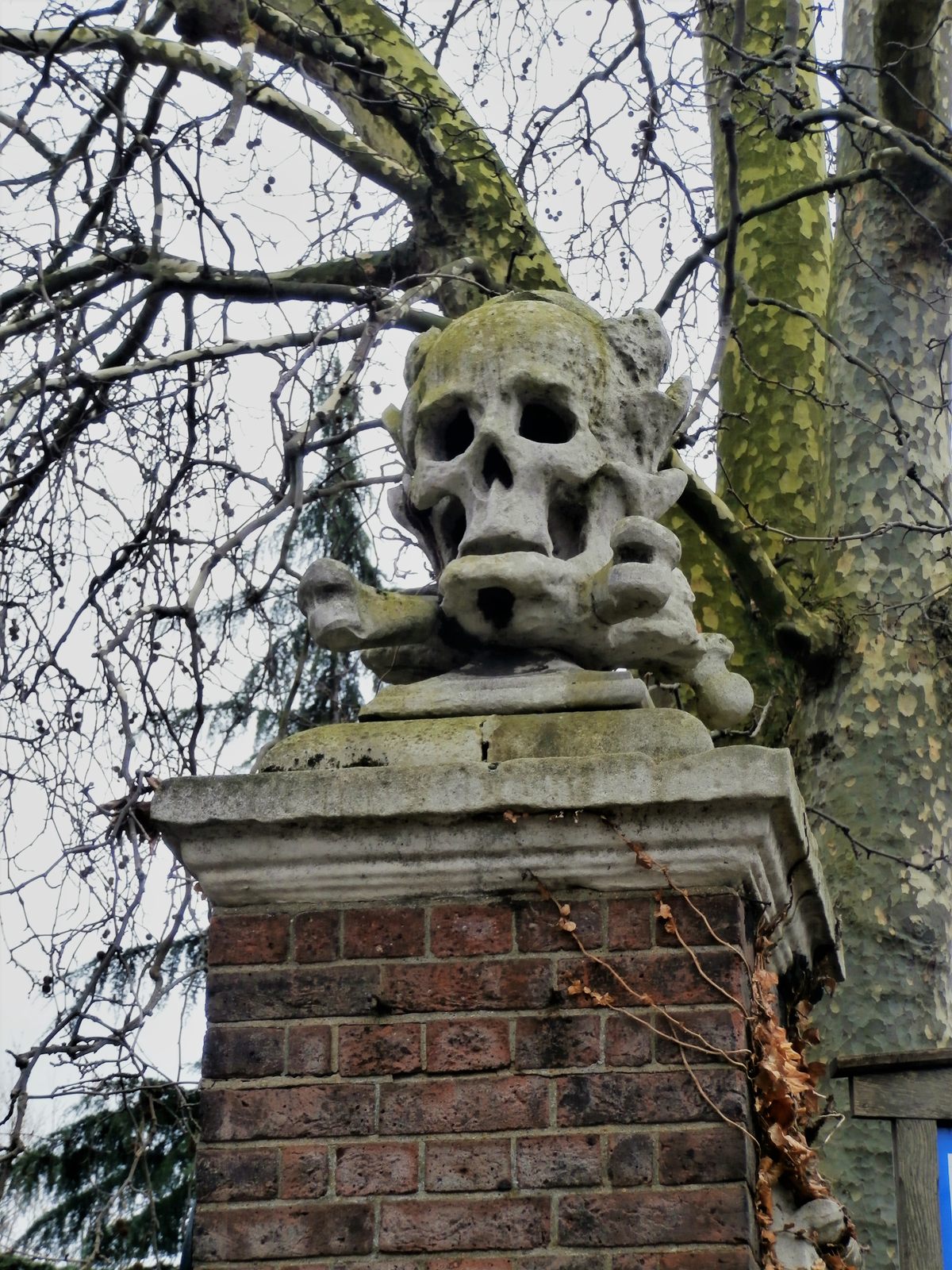
Anyway, I think that’s most of it. Other than that I’m just scouring local history for more fun bits to put into the dungeons! No spoilers, but I did just come up with something based on playwright Christopher Marlowe. Specifically how he was murdered in a Deptford pub (probs by the queen’s assassins) and buried in an unmarked grave at the nearby medieval-era church of St Nicholas - the skull-and-crossbones gateposts of which (pictured below), according to legend, inspired Captain Morgan (yes, that one) to invent the Jolly Roger. I love this shit man

Don’t forget to check out Graverobbers here! More soon x


Friday, 26 May 2023

Modular Ecology


Been playing that Zelda game everyone’s on about, and rereading Dungeon Meshi (trailer just came out for the tv version!) and thinking about the way they do ecology, and started folding those thoughts into a Graverobbers thing I’m working on (not the current thing, the next thing).

What I’ve landed on is a hopefully practical approach to including gameable ecology in adventure games. I think crafting systems that ape video games can very quickly fall into tedium, and abstracted versions don’t really jive with the strict inventory-based playstyle I’m aiming for.

The long and short of it is defining materials by location. Zelda, for instance, has plants that grow in hot/cold places only, but also ones that grow in, say, quiet places, which I think is a very nice bit of magical thinking. Dungeon Meshi defines all its dungeon inhabitants in relation to one another in a more complex system suited to its medium, but I’m drawing inspiration from that overall vibe too.

So, for example, in the full version of A Pocket Guide to Smocklehythe, I introduce “coffin rot”, a black fungus which grows “only on an unloved grave”. Or, we might say that the flower “mourner’s tears” requires the opposite - the grave of someone dearly missed, plus plenty of water and not too much warmth or light.

The big advantage of this as I see it is its modularity - I can define the prerequisites for a plant’s growth within a single section of a book, then not have to bring it up again elsewhere. We know that trolrushes grow only by slow rivers and under bridges, so we can assume that every bridge over a slow river mentioned in this book is a good place to find them. In this way the players and GMs who want to bring this up, focus on it, or use the information practically can do so, without sacrificing the flow or efficiency of the text.

The bigger picture then is that this extends to other modules, past and present. Graverobbers assumes all its adventures take place within one city, so if players encounter a bridge over a slow river in another adventure - one I wrote years ago without thinking, or later on without wanting to reference an otherwise unrelated text - the ecology systems from the other module can be easily incorporated.

That’s the ultimate aim of course, to use this to introduce practical, gameable elements to the play space. The important thing about coffin rot, as your players will find when the full Smocklehythe drops, is that it can be distilled into an ink that makes magical tattoos. Lore only matters when it matters right now.

So, mourner’s tears attract a particular butterfly which lays its eggs among the mauve flowers and abandons them when they hatch. The caterpillars protect themselves by secreting a substance which attracts ants - the line of ants bringing food back to a grave grown with mourner’s tears to feed the hungry caterpillars they farm is often called a worker’s wake, and it’s considered bad luck to step over one.

There will also be an NPC in the module who can use mourner’s tears to brew a particular potion. So now players have a choice of leaving the plant and harvesting the substance to attract ants - for whatever reason - or picking the flowers and using them for something else.

This aligns with the way I tend to prefer to do magic in adventure games, as a series of truths about the world. In much the same way that players already know they can use fire to cast light, burn things, warm things up, melt them etc, they can also learn that, for instance, moonlight reveals all magical illusions.

The player’s arsenal of tools expands in more interesting ways when magical effects are constants within the game’s reality, that can be exploited like any other in-game truth. (This is the kind of thinking that Zelda players and Dungeon Meshi’s characters use to great effect. See this recent prismatic wasteland post for more on Zelda and ttrpgs.)

So, by defining in-game ecology as

- a series of facts, truths about the world

- concerning the locations of in-game items with useful effects

- allowing for use across otherwise disparate adventures within the same fictional space

I’m hoping to create a system that’s easy to reference (or ignore as players see fit), useful and fun to engage with, and allows for easy modularity between different adventures (or indeed, sections of the same adventure)

Idk thought that might be useful to someone! Ok, back to work ✌️

Monday, 22 May 2023

The Crimes of Smocklehythe

A Pocket Guide to Smocklehythe is out now (see last post) and I felt like going over some of the inspiration behind the 6 new Crimes in the game.

A bit of class design, a bit of history (like I did in this tweet thread going over the real history of a GRAVEROBBERS pamphlet adventure). Part of me is very David Lynch “the film is the talking” about stuff like design influences but part of me is a huge nerd with a big loud mouth sooooo

All of these are real crimes from real London’s past or present. With the original 6 classes in the Bare Bones, I wanted to allow for a lot of wiggle room as to whether a character actually committed a crime, make people think just a bit about what constitutes a crime, etc. These are a little more direct but hopefully still have some of that vibe

Btw while I’m at it “Smocklehythe” comes from the root word for “smuggle” and the -hythe suffix seen in various South London place names (Rotherhithe, the -eth in Lambeth) referring to a place where things were brought in by river. Rotherhithe: cattle, Lambeth: sheep, Smocklehythe: contraband.
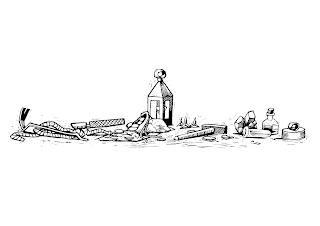
Art by Jon Bliss

Firebrand. A fun word for “protestor” essentially, or “organiser”. Very fitting for Graverobbers’ setting, I’ve been wanting to do one of these for a while. All their starting items are real things used locally in non-violent protest throughout history, but also classic dungeon-y adventure game items. As a class they’re great for causing trouble

Also I’m aware people (especially outside the UK) might not know what a toffee hammer is, but it’s easy enough to figure out, plus you can just google it. I try to explain things I made up fairly thoroughly, so if something seems obscure chances are it’s from real life and you can just look it up.

Gaolbreak. Hey. How do you think gaol is pronounced? Yeah, I thought so too. Turns out we’re both wrong, it’s literally just an obsolete spelling of “jail”. Anyway I don’t think I need to explain that escaping prison was illegal throughout London’s history. Still is, far as I’m aware. I’m not certain. Never been caught.

This fills the same space as the Burglar in the classic Bare Bones, it’s the rogue archetype. I enjoy the thought of these tools meant for escape being used for a little b&e.

Mooncusser. real word! Real thing, real crime. Mooncusser is actually, gasp, an American term, but the English version, “wrecking” is a huge part of national criminal history. Wreckers were smugglers who supposedly deliberately wrecked ships, chiefly up and down England’s south coasts.

Smuggling is like a whole legendary folkloric concept here. It’s like the whole Robin Hood thing. Visit any seaside town, especially in the south west, and there’ll be a plaque or museum or guided tour about its smuggling history. I don’t sing the praises of much English culture but I do enjoy our predilection towards folk heroes being lower class folk “getting away with it”.

Also shrub is like a tangy citrus liqueur, later replaced with vinegar. Smuggled rum was often left hidden underwater, and adding a dash of shrub helped dilute the flavour of the seawater that’d seeped in. Ah and as far as class design, these guys are pretty much archetypal Graverobbers characters, primed for mischief

Nighthawker. The British term for metal detectorists who illegally steal the treasure they find. Very classic adventure game dungeon stuff. A good place to add in the only magic item, something practical and thematic that I’m sure has all sorts of nefarious uses. A touchstone is a real thing used to test for metals, but I like my magic version better.

This class is kinda the “finding and getting” class, which also extends to the Black Market as they’ve got decent average starting money plus a whole coin they can pawn.

Resurrectionist. Real thing, probably something most people have heard of. Surgeons on the cutting edge, if you will, of modern medicine wanted cadavers to experiment on and showcase in lecture halls. They had money and weren’t fussy about where the bodies came from. Resurrectionists were, wait for it, graverobbers. Burke and Hare are probably the most famous example and worth reading up on (there was a film, it’s not good), but this was a HUGE cottage industry for a long time.

The clothing is because they’d often disguise themselves as mourners to get access to graveyards. The wooden spade is because they make less noise! As a class these are kind of a variant nighthawker, there’s a decent amount of shared “archetypal Graverobbers” vibe between a lot of these which i felt was appropriate for a starter set.

Witch. Probably the one I need to explain least? So much stuff written about witch hunts and witch trials in England, and there’ll be a lot more of it to come in Graverobbers. This class is ideal for causing a bit of chaos. Start with no money but also the most expensive starting item so still p versatile. (Of course in an inventory-based system any character can redesign their whole deal fairly easily, but I like to think there’s something to the flavour of starting with a name and set of items like these)

You might think this’d be the class with the magic item, but I decided to go with what the witch hunt victims actually often were - women with above average knowledge of botany and medicine. Even at the time, most folk didn’t necessarily believe in witches, and there was growing awareness that this whole thing was just about oppression.

Oh, and a besom is a broom, that specific type of witchy broom with the sticks bundled around a central handle. There are a records of “witches” coating broom handles in psychoactive substances and using them as sex toys. Hence “riding a broom”, according to some theorists.


And that’s all of them! Check out the new rules here and roll up some characters, see what crimes you end up accused of! If you survive character creation.